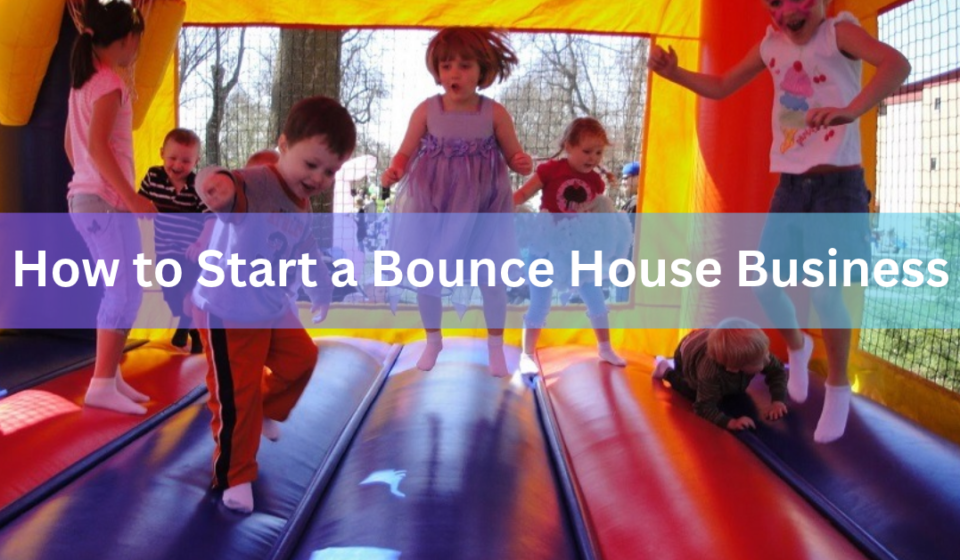

You can start a bounce house business by choosing a local market, checking permits and insurance rules, buying commercial-grade inflatables, and building a reliable delivery and cleaning process. Start small, price each rental to cover labor as well as equipment, and make safety part of every booking. The goal is not to own the most inflatables. It is to deliver a clean, secure setup that customers trust and recommend.
1. Understand what the business involves
A bounce house rental business owns inflatable play equipment and rents it for birthday parties, school events, church gatherings, company picnics, and community celebrations. You usually handle delivery, setup, anchoring, customer instructions, pickup, cleaning, and storage. That makes this a hands-on local service, not passive income.

Before you spend money, be honest about the work. A busy Saturday can involve several heavy loads, tight delivery windows, hot weather, wet vinyl, and late pickups. You will also answer questions during the week, confirm measurements and access, collect deposits, and manage cancellations when weather turns bad.
Decide who you want to serve first. Backyard birthday parties are a straightforward starting point because customers usually need one unit for a set period. Schools and larger events may bring repeat work, but they can ask for extra insurance documents, inspections, staff, or vendor approvals.
2. Check demand before buying equipment
Start by studying the area you can realistically serve, often a 15- to 30-mile delivery radius. Search for local rental companies, compare their available units and delivery fees, and note which dates appear busy. Look at community groups and event calendars to see how often families, schools, and organizations hold events.
Call or message a few potential customers, such as daycare centers, school activity coordinators, event planners, and parent groups. Ask what they rent, what causes problems, and what they need that local providers do not offer. A gap might be clean toddler-friendly units, clear delivery windows, weekday service, or a simple online booking process.
Make a simple demand sheet with competitors, prices, service areas, popular unit types, and possible customer groups. Do not assume every inquiry will turn into a booking. Check how many weekends you can work, how far you are willing to drive, and whether your storage and vehicle can handle the equipment.
3. Work out the startup budget
Your startup cost depends on how many units you buy, whether you already own a suitable vehicle, the local insurance market, and any inspection or permit fees. For a U.S. operator, a lean one-unit launch may run into several thousand dollars once equipment, a blower, anchoring gear, insurance, transport, cleaning supplies, and registration are included. A multi-unit setup with a trailer can cost much more.

Use supplier quotes and insurance quotes to build a budget before committing. The figures below are planning ranges, not guaranteed prices. Shipping, taxes, commercial-grade specifications, and local rules can change the final total.
4. Choose the right first inflatables
Buy commercial-grade equipment intended for rental or commercial use. A low-cost residential inflatable may not suit repeated setup and teardown, and your insurer or local regulator may not accept it. Ask the manufacturer for the model’s intended use, operating manual, dimensions, user limits, anchoring instructions, repair guidance, and inspection records.
For many new operators, one standard bounce house is easier to manage than several specialty units. A combo unit with a slide can command a higher rental fee, but it may weigh more and need extra space, labor, and transport capacity. Water slides can be attractive in hot months, though they add water management, drying, and weather concerns.
Before ordering, check the actual packed size and weight. Make sure the unit fits your vehicle or trailer and that you can move it safely. Buy the correct blower, rated extension cords, suitable anchors or weights, ground tarps, a dolly, cleaning products, and a repair kit. Keep a spare blower if the budget allows, because a failed blower can ruin a booking.
5. Register the business and check local rules
Choose a business structure and register the name as required where you operate. In the United States, an LLC is one option, but the right structure depends on your risk, taxes, ownership, and costs. A business bank account and separate bookkeeping make it easier to track deposits, expenses, refunds, and taxes.

Rules vary by state, county, city, and event venue. Ask the relevant local and state offices whether inflatable rentals need a business license, amusement-device registration, operating permit, inspection, or a permit for public parks. Check zoning rules if you plan to store equipment at home. The U.S. Small Business Administration’s launch-your-business checklist is a useful starting point for registration, tax IDs, permits, and insurance.
Do not take paid bookings for dates when you may not be legally able to operate. Keep copies of approvals, inspection reports, manuals, and insurance documents together so you can provide them quickly to venues or customers.
6. Get insurance that covers inflatable rentals
Talk to an insurance broker who understands inflatable amusement equipment. Explain exactly what you rent, whether you deliver and set up, whether customers supervise the unit, and whether you serve public events. Ask for written confirmation that the policy covers bounce houses and any slides or obstacle courses you plan to rent.
General liability is a key starting point, but it may not cover every loss you face. Ask about equipment or inland marine coverage for units in transit and storage, commercial auto coverage, workers’ compensation if you hire staff, and any umbrella coverage a venue requires. Compare exclusions, deductibles, limits, and whether the policy covers damage to rented equipment.
Never rely on a generic policy description or assume a customer waiver replaces insurance. Confirm the exact activities and equipment with the insurer, and do not operate until the required coverage is active.
7. Build a safety routine before the first booking
Safety procedures should be written down and used at every event. Read the unit’s operating manual and follow the applicable local rules and inspection requirements. The U.S. Consumer Product Safety Commission describes relevant voluntary standards for inflatables, including ASTM F2374 for commercial-use inflatable amusement devices. You can review the standard’s scope on the official ASTM F2374-24 page.
Before setup, inspect the site for overhead wires, trees, fences, sharp objects, slopes, drainage issues, and enough clearance around the unit. Use the manufacturer’s specified anchors or weights. Never improvise an anchoring method, and do not set up where you cannot secure the inflatable as required.

Check the forecast and measure wind when required by the manual or local rules. Set a clear wind and weather shutdown policy before taking bookings. If conditions exceed the unit’s limits, stop use, clear the inflatable, and follow the manufacturer’s safe deflation procedure. Rain, lightning, and sudden gusts need a plan, not a last-minute guess.
At handoff, explain age and height limits, maximum occupancy, safe entry and exit, and rules against rough play, climbing walls, shoes, sharp objects, and mixing users who are too different in size. The customer agreement should name the responsible adult, but a signed form does not replace safe setup or required supervision.
After every rental, inspect seams, netting, anchor points, blower connections, and the floor. Clean and fully dry the unit before storage. Record damage and repairs, and take an unsafe unit out of service until it has been fixed and checked.
8. Set prices that cover the real work
Research local rates, then calculate your own minimum price. Include delivery time, setup and pickup labor, fuel, payment fees, cleaning, repairs, insurance, storage, equipment replacement, and the time spent answering messages. A rental fee that only covers the purchase price of the inflatable can leave you working for very little.
Use a clear base rate for a defined rental period and delivery area. Charge extra for longer distances, stairs or difficult access where appropriate, late pickup, additional operating time, or optional add-ons. State whether sales tax applies in your area and whether delivery, setup, and teardown are included.
Here is a simple example. If one booking brings in $225 and direct costs for labor, fuel, cleaning, and payment fees total $75, the booking leaves $150 before fixed costs, taxes, equipment wear, and your own overhead. That $150 is not the same as net profit. Track actual costs after each event and adjust your rates when the numbers do not work.
9. Get your first customers
Make it easy for people nearby to find and trust you. Set up a clear website or booking page with real photos, unit dimensions, prices or starting rates, delivery areas, setup requirements, weather policy, and contact details. Use a local business profile where eligible, and keep business name, phone number, service area, and opening hours consistent.
Ask happy customers for honest reviews after the event. Share photos only with permission, especially when children are visible. Post useful local content, such as how much yard space a unit needs or what to check before reserving a water slide. These details help customers decide and can bring search traffic over time.
Build referral relationships with party planners, daycares, schools, churches, community centers, and venues. Offer a clear process for getting a quote and proof of insurance. You can test a small introductory offer, but avoid setting a low price that you cannot sustain. Reliability, clean equipment, and prompt communication are stronger long-term selling points than constant discounts.
10. Manage bookings and grow carefully
Use a calendar or booking system that tracks unit availability, delivery windows, addresses, deposits, balances, access notes, and pickup times. Send customers a written confirmation and a reminder before the event. Your rental agreement should cover payment dates, cancellations, weather, site access, supervision, damage, and the customer’s responsibilities.

Keep the first season simple. Measure inquiries, conversion rate, bookings per unit, average rental value, travel time, cancellations, maintenance, and repeat customers. These figures show whether you need more inventory or simply better pricing and scheduling.
Add another unit when you can see demand you are turning away and you have the storage, transport, cash, and labor to serve it. Do not buy a water slide because it looks profitable in a spreadsheet. Confirm local demand, insurance, handling requirements, and safe drying and storage first.
Frequently asked questions
How much money do you need to start a bounce house business?
Plan for several thousand dollars for a lean launch, then build a budget from actual equipment, transport, insurance, registration, and supply quotes. Costs rise quickly if you need a trailer or several commercial units.
Do you need a license to rent bounce houses?
It depends on your location. Check city and county business licensing rules, state amusement-device requirements, inspection rules, and any venue permits before accepting bookings.
What insurance does a bounce house rental business need?
Start by asking a broker about general liability that explicitly covers commercial inflatable rentals. Depending on your setup, you may also need equipment coverage, commercial auto, workers’ compensation, or higher limits for venues.
How much can you charge for a bounce house rental?
Rates vary by market, unit type, rental length, delivery distance, and season. Compare local competitors, then calculate your own floor price using labor, fuel, cleaning, repairs, insurance, and equipment replacement.
Can you run a bounce house business from home?
Often, but first check local zoning, storage rules, parking, and any limits on home-based businesses. You also need a clean, dry storage area and a vehicle that can safely carry the equipment.
Conclusion
To start a bounce house business, validate local demand, price the full cost of each rental, register properly, secure insurance that covers your equipment, and set clear safety procedures before accepting bookings. Begin with a commercial unit you can transport and store, then focus on clean equipment, dependable delivery, and clear customer communication. Expand only when real bookings support the next investment. A small, well-run operation is a stronger foundation than a large fleet without enough customers.
Recommended Articles:
How to Start an Auto Transport Business: 9 Steps
Can a Business Sue for Defamation? What You Must Prove
What Is Covered Under a Powertrain Warranty?
Does 19thstategroup.com Have a Blog? What You’ll Find Instead



[…] How to Start a Bounce House Business: A Practical Step-by-Step Guide […]