

To start a snow removal business, decide which jobs you will take, register the business, buy insurance, get gear that fits those jobs, set your prices, sign written contracts, and find customers before the first storm. You can begin with a shovel and a snowblower for under $2,000. A plow truck costs more, but it opens the door to bigger, better-paying work.
This guide walks through each step in order, with real costs, the insurance you can’t skip, and the contract terms that keep you out of trouble.
One thing to know before you start. Snow work is seasonal and hard to predict. Storms hit at 3 a.m., on holidays, and on weekends, and your income rises and falls with the weather. The best operators plan for a light winter as well as a big one.
Step 1: Choose the kind of snow removal you will offer
This first choice shapes what you buy, what insurance you need, and who your customers are. There are three main paths.
- Residential. Driveways, walkways, and steps for homeowners. Start-up costs are low and the jobs are small, so you need a lot of customers to earn a good living.
- Commercial. Parking lots, sidewalks, and loading areas for stores, offices, and apartment buildings. These contracts pay more, but they call for a plow truck, more insurance, and fast response times.
- Ice control only. Spreading salt or other ice melt on lots and walks, often for clients who already have someone plowing.
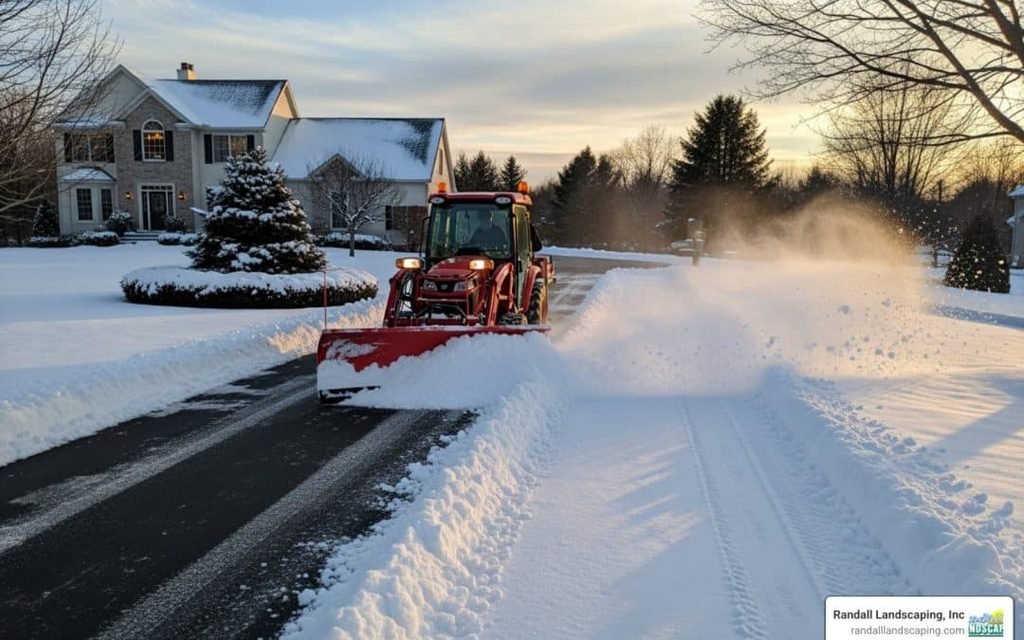
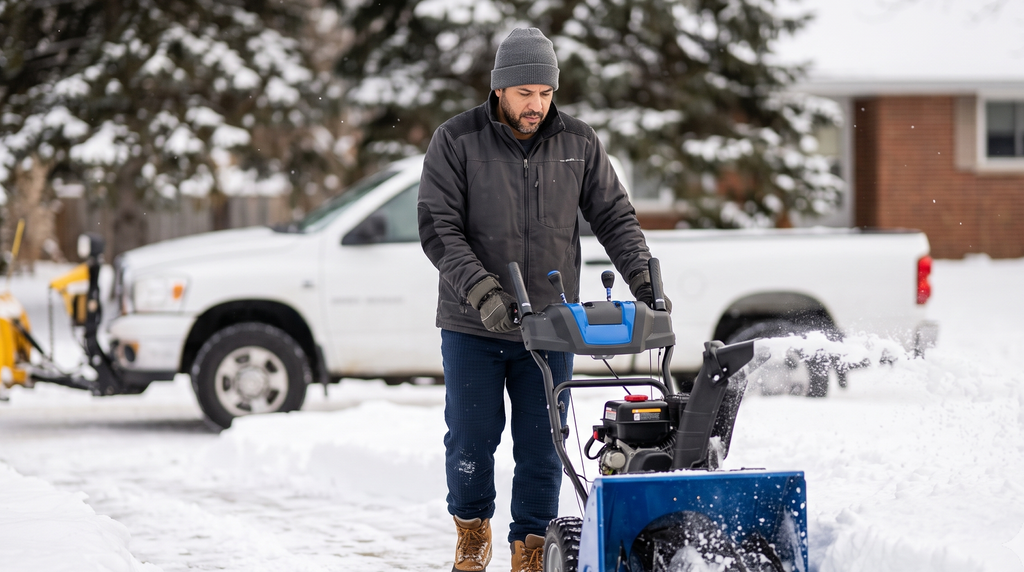
A common way to begin is residential work with a snowblower and shovels. Once you have steady customers and some savings, add a truck and plow. If you already run a landscaping, lawn care, or handyman business, snow work can fill your slow winter months using the customers you already have.
Before you spend anything, look at the local competition. Search “snow removal near me” on Google Maps, then check what services those companies list and what they charge. Gaps are easy to spot: a neighborhood nobody serves, sidewalk clearing, or a promise of fast response.
Step 2: Set up the business the right way
Register the business, get a tax ID, and open a separate bank account. This takes a few days and should be done before your first paid job.
A sole proprietorship is the simplest setup, but you and the business are the same legal person. An LLC (limited liability company) can help keep your personal assets apart from business debts and lawsuits. That matters in a trade where someone can fall on a walk you cleared.
Next, get an EIN (employer identification number), a nine-digit tax ID. You can apply for free on the IRS website and get the number right away. Many banks ask for one to open a business account, and you need one if you hire employees. If you are forming an LLC, set it up with your state first, then apply. Never pay a site that charges a fee for an EIN.
Then check local rules, because they vary by town and state. Some places require a snow removal contractor permit, which can cost roughly $50 to $150 and take a few weeks. Others file snow work under a general contractor license. Call your city or county clerk and ask.
Also call the zoning office before you park a plow truck at home, since some towns limit commercial vehicles in residential areas. Heavier trucks and trailers can bring commercial driver’s license rules, so check your state’s weight limits before you buy.
Step 3: Get the right insurance
Insurance is the one cost you should never cut. Snow contractors face two main kinds of claims: people who slip and fall, and damaged property.
A fall can happen hours after your truck leaves. In one New Jersey case, a jury awarded $2.25 million to a woman who slipped in a parking lot and found the snow contractor 30 percent responsible. Around 90 percent of slip-and-fall claims come from storms with less than an inch of snow, so a light dusting or a refreeze is not a night to skip.

Here is the coverage most snow businesses need:
- Commercial general liability. Pays for injury and property damage claims, including claims that come after your work is done. Most customers require it.
- Commercial auto. A personal auto policy will not cover a plow truck used for business.
- Workers’ compensation. Needed once you hire employees.
- Umbrella. Extra liability limits, usually bought in $1 million layers. Larger contracts typically require one.
- Equipment coverage. Protects tools and gear that leave your property.
Ask your agent about three add-ons, called endorsements. A standard general liability policy leaves out claims tied to vehicles, so the CG 22 92 snowplow completed operations endorsement is what covers a truck used for plowing. Commercial clients also tend to ask to be named as an “additional insured” on your policy (forms CG 20 10 and CG 20 37), and they may want your policy to pay first. SIMA’s insurance page explains each of these and lists insurance partners who know the snow trade.
Tip: Before you buy a policy, ask your insurer one direct question: “Does this cover a slip-and-fall that happens after we finish a site, and is there any snow-specific limit?” Also confirm each client’s insurance requirements in writing before you sign.
Step 4: Buy equipment and plan your start-up budget
Your costs depend on the path you picked in Step 1. These are realistic ranges for the common setups.
| Setup | What you can handle | Typical cost |
| Shovels and snowblower | Walkways, driveways, small lots | Under $2,000 |
| Plow on a truck you own | Driveways and small lots | About $5,000 to $10,000 |
| Plow, spreader, permits, and first insurance on a truck you own | Driveways and commercial lots | About $15,000 to $25,000 |
| Used truck with plow | Full plow work, if you don’t own a truck yet | About $15,000 to $30,000, before spreader and insurance |
A commercial-grade snowblower runs about $2,000 to $5,000 on its own. Set aside at least $1,500 for plow and truck repairs, so one breakdown in January doesn’t end your season.
Which truck? A half-ton pickup (a 1500 or F-150 class) can handle driveways and light commercial work with the right plow. A three-quarter-ton or one-ton truck handles bigger lots without strain, and it still works fine on small jobs. Four-wheel drive is a must either way.
The number that matters most is the front gross axle weight rating, or FGAWR. It is on the sticker inside the driver’s door and shows the most weight the front axle can safely carry. A plow hangs off the front, so its weight adds straight onto that axle. Weigh the front of your truck on a public scale, subtract that from the FGAWR, and the difference is the most plow weight you can mount.
As a rough guide, half-tons handle plows of about 400 to 500 pounds, while three-quarter-ton and one-ton trucks carry 700 to 1,000 pounds or more. A 7.5-foot straight blade built for half-ton trucks weighs around 417 pounds before the mount. A straight blade is enough for driveways and small lots. Many commercial plowers choose a V-plow, which breaks up packed snow and moves it more ways, but it costs more and needs a bigger truck.
Round out the kit with shovels, ice melt, and a spreader for salt. Add a way to take payments on the go, and scheduling and invoicing software once you have more than a handful of clients.
Step 5: Decide how much to charge
There are three common ways to price snow work. Pick the one that matches how often it snows where you live.
| Pricing model | How it works | Fits best | Watch out for |
| Per push | A flat price each time you plow | Areas with uneven snowfall | Income drops in a light winter |
| Seasonal contract | One flat price for the whole winter | Areas with steady, heavy snow | A big winter eats your margin |
| Per inch or hourly | A base price plus a set fee for deeper snow or time on site | Large lots and mixed storms | You must agree on how depth is measured |
A seasonal contract gives you steady income even in a dry winter, because the customer pays whether it snows or not. The catch is that you take on the weather risk. Per-push pricing can earn more in a heavy winter, but it dries up in a light one. Many businesses mix the two.

For homeowners, a driveway often runs about $30 to $75 per visit, and long driveways with walkways cost more. Seasonal residential deals often fall between $200 and $600. Small commercial lots usually land in the low thousands for a season, and large lots cost much more.
Still, don’t copy a competitor’s price. Work out your own, starting with your hourly cost. Add fuel, truck wear, insurance, labor, and the time you spend driving between jobs. Then add profit. If your costs come to $45 an hour and a driveway takes 20 minutes including travel, you need $15 just to break even. Charging $40 leaves room for profit and for the hours the truck sits idle.
Set a trigger depth too, which is the snow depth that starts a visit. About two inches is common for commercial lots. For per-inch pricing, you might charge $60 for up to four inches and $15 for each added inch.
A one-truck business can gross tens of thousands of dollars in a normal winter. What you keep depends on fuel, salt, insurance, repairs, and how much it snows, so build prices that cover your costs in a lean winter, not only a good one.
Step 6: Put every job in a written contract
A contract protects you from unpaid bills, arguments over what you promised, and blame for things you can’t control. Use one for every client, even a neighbor. A good snow contract covers these points:
• The exact areas you will clear, such as driveway, walks, steps, or loading dock.
• The trigger depth and how it is measured.
• A service window, for example within 12 to 24 hours after the snow stops.
• Price, payment due dates, and late fees.
• Where you will pile the snow.
• Who handles ice, which product is used, and how much. If a client wants less salt or none, put that in writing.
• A clause saying you are not liable for hidden objects under the snow, such as landscape lights or loose pavers. Ask the client to mark them before the first storm.
• Your right to delay service when conditions are unsafe.
• Your insurance details and the terms for cancelling.
Read any contract a client hands you with care. Some large clients use generic language that makes the contractor responsible for every slip-and-fall on the property. That can leave you holding risk you never priced in.
Step 7: Find your first customers
Start before the first snowfall. The steadiest customers sign up in late summer and fall. People who search during a storm want someone right now, and if you aren’t easy to find, you miss those calls too. Here is where to look:
- Google Business Profile. It is free. List your service area, phone number, and photos of your truck and work.
- Tight neighborhoods. Leave flyers or door hangers on a few streets close together. Nearby jobs mean less driving, which means more profit per hour.
- Property managers and small businesses. Call managers, small shopping centers, churches, medical offices, and homeowner associations. One lot contract can pay more than a dozen driveways.
- Referrals. Ask neighbors, friends, and any customers from other work you do.
- Your truck. Letter the doors with your name and number.
In your first year, aim for a tight route of dependable customers rather than a long, scattered list.
Step 8: Run each storm and keep records
A good storm routine keeps customers happy and keeps you covered if something goes wrong. Follow the same order every time:
- Watch the forecast two or three days out, and tell customers when you expect to arrive.
- Check the truck, plow, fuel, and salt supply before the storm starts.
- Plow in a set route order, with the sites that need early access first, such as medical offices.
- Treat for ice after plowing where your contract calls for it.
- Log the visit before you move on.
Your log should show the time you arrived and left, the weather, what you did, and photos of the site when you finished. If someone claims they fell at one of your sites, these records are your best defense. Keep them for years, because claims can arrive long after the storm. If you get a claim notice, call your insurer before you speak with anyone about it.
Tip: Snow pays for a few months. Many owners add lawn care, landscaping, hauling, or gutter work, so the truck and the customers keep earning in the warm months too.
Frequently asked questions
How much does it cost to start a snow removal business?
It runs from under $2,000 for a shovel and snowblower service to roughly $15,000 to $25,000 for a plow and spreader setup on a truck you already own. A used truck with a plow often costs $15,000 to $30,000. Keep $1,500 aside for repairs.
Do I need a license to start a snow removal business?
It depends on where you live. Some towns require a snow removal contractor permit, and some file snow work under a general contractor license. You also need to register the business and get an EIN. Call your city or county clerk before you take paid jobs.
How much should I charge for snow plowing?
Homeowner driveways often cost about $30 to $75 per visit, and seasonal deals often fall between $200 and $600. Work out your own hourly cost for fuel, insurance, labor, and truck wear first, then add profit so you still earn in a light winter.
Can I start a snow removal business without a truck?
Yes. Walkways, steps, and driveways can be cleared with shovels and a snowblower, which costs under $2,000 to set up. You can also offer ice melt spreading. Move up to a truck and plow once you have steady customers and want parking lot work.
Is a snow removal business profitable?
It can be, but results swing with snowfall. A one-truck business can gross tens of thousands of dollars in a normal winter. Profit comes from pricing to cover fuel, salt, insurance, and repairs, and from keeping routes tight so you drive less.
Conclusion
To start a snow removal business, choose your service, register the business, get a tax ID, and buy insurance that covers plowing and slip-and-fall claims. Buy gear that fits your first jobs, price to cover a light winter, and put every job in a written contract. Sign customers in the fall and log every visit. Do that, and you will have steady routes, fewer disputes, and a business that holds up when the weather doesn’t cooperate.
Recommended Articles:
How to Start a Bounce House Business: A Practical Step-by-Step Guide
What Is Covered Under a Powertrain Warranty?
Can a Business Sue for Defamation? What You Must Prove
Does 19thstategroup.com Have a Blog? What You’ll Find Instead
603 Manufacturing Warranty, Returns and Shipping Terms Explained



[…] How to Start a Snow Removal Business: A Step-by-Step Guide […]
[…] How to Start a Snow Removal Business: A Step-by-Step Guide […]