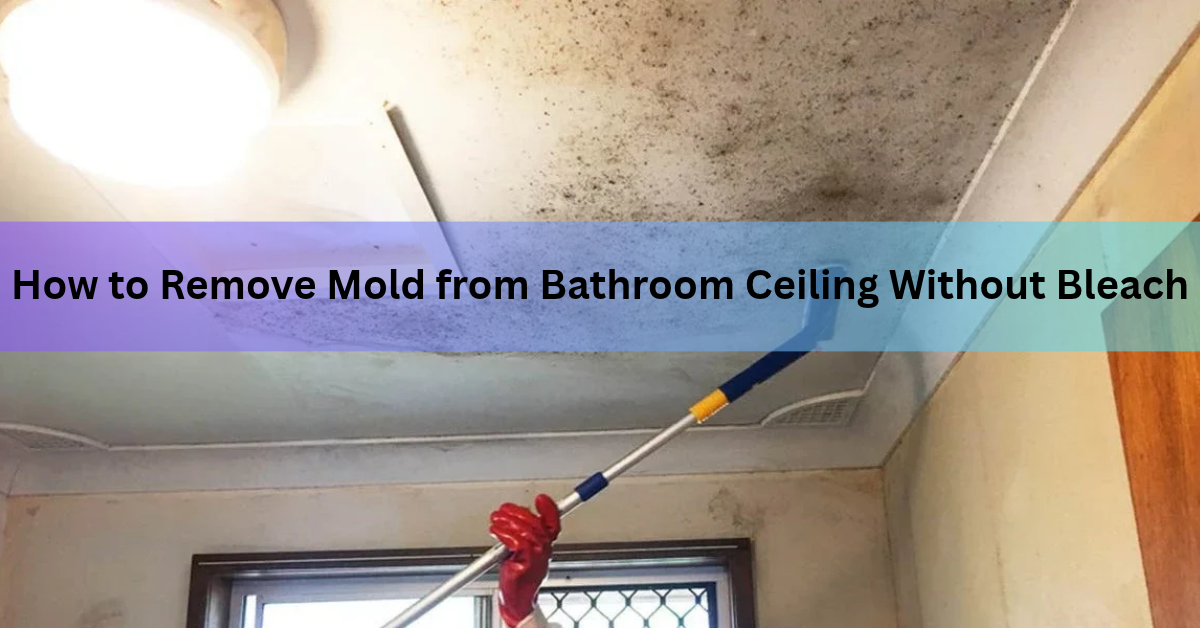

You look up while lying in the bath and see them: small black or green spots on the ceiling. Mold in the bathroom is very common, because bathrooms are warm, damp, and often poorly ventilated. Many people grab bleach right away, but bleach has a strong smell, can irritate your eyes and lungs, and can damage paint. It also doesn’t always kill mold at its root on porous surfaces like drywall or painted plaster.
The good news is that you can clean bathroom ceiling mold safely with simple things you probably already have at home. This guide walks you through the whole process in plain steps.
Why Does Mold Grow on Bathroom Ceilings?
Mold needs three things: moisture, warmth, and something to feed on. Your bathroom provides all three. Steam from hot showers rises and settles on the ceiling, which is usually the coldest surface in the room. Water droplets form, and soap residue, dust, and skin oils give the mold food.
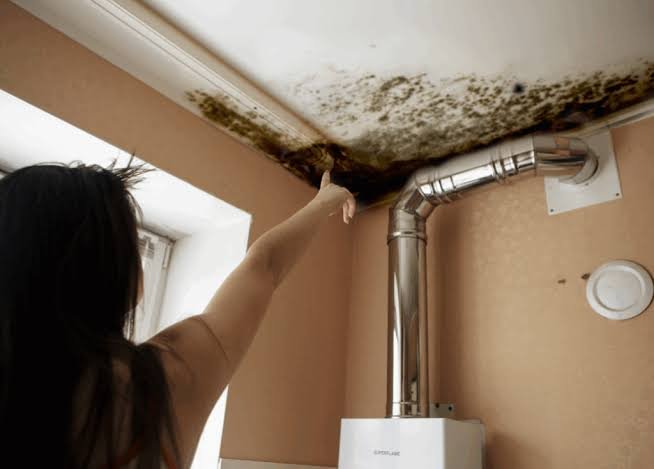
If your bathroom has no window or a weak exhaust fan, the problem gets worse. Knowing this matters, because cleaning alone won’t help for long if the moisture stays.
Before You Start: Safety First
Even without bleach, mold spores can bother your nose and lungs. Take a few simple precautions:
- Wear rubber gloves, safety glasses, and a dust mask (an N95 is best).
- Open the window and turn on the fan, or both.
- Put an old sheet or plastic cover on the floor and over the tub.
- Use a sturdy step ladder. Never stand on the edge of the tub.
If you have asthma, allergies, or a weak immune system, ask someone else to do the cleaning.
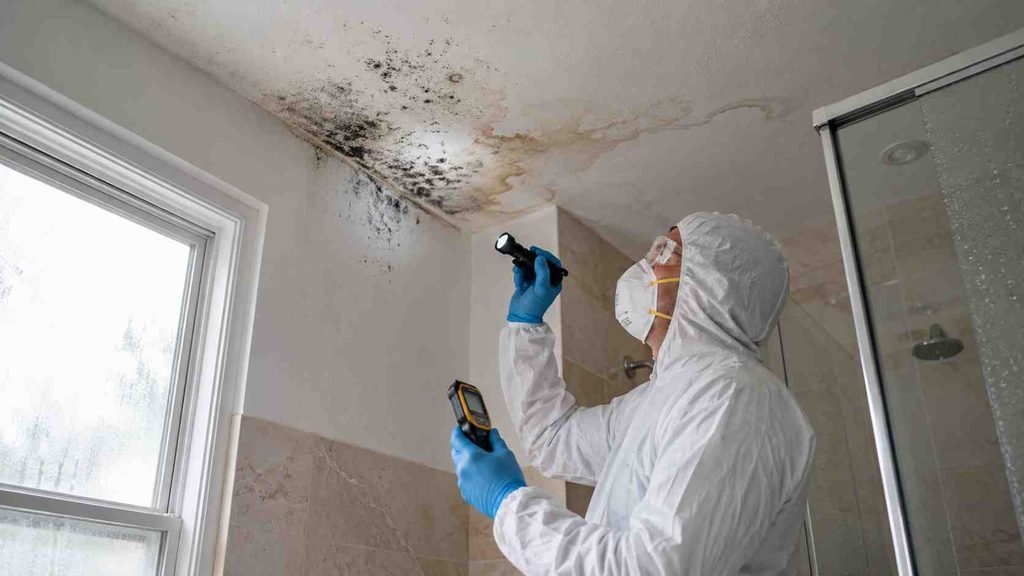
Step 1: Check How Big the Problem Is
Take a good look at the ceiling. If the mold covers an area smaller than about one square meter (roughly 10 square feet), you can safely handle it yourself. If it covers a larger area, keeps coming back, or the ceiling feels soft, sags, or has water stains from a leak above, call a professional. That points to a deeper moisture problem that cleaning cannot fix.
Step 2: Choose Your Bleach-Free Cleaner
Here are the best options, from the most popular to the gentlest.
White Vinegar
Plain white vinegar is a favorite for good reason. It’s mildly acidic and can kill a large share of common household mold species. Pour undiluted white vinegar into a spray bottle, spray the moldy patches until they’re wet, and let it sit for at least an hour. The smell is strong at first but fades once it dries.
Hydrogen Peroxide (3%)
The ordinary 3% kind from the pharmacy works well and is gentle on most surfaces. It also has a light whitening effect, which helps with dark stains. Spray it on the mold and let it sit for 10 to 15 minutes. One warning: it can lighten some colored paints, so test a tiny hidden spot first.
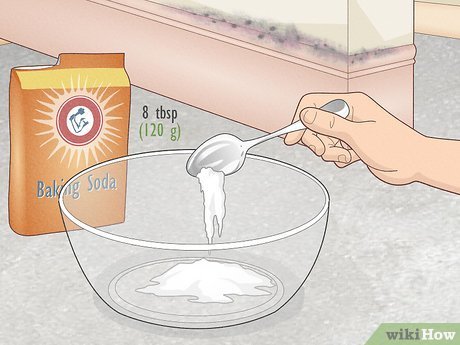
Baking Soda Mixed with Water
Baking soda is mild, safe, and good at lifting stains. Mix one teaspoon of baking soda into a cup of warm water, shake until dissolved, and spray. It’s slower than vinegar, but it’s a great choice if you want something very gentle.
Tea Tree Oil
Tea tree oil is natural and works against mold, though it’s more expensive. Mix one teaspoon of the oil with one cup of water in a spray bottle, shake well, and spray. Do not rinse it off. The smell is strong but it fades in a day or two. Keep it away from pets, especially cats.
Grapefruit Seed Extract
This is another natural choice. Mix about 10 drops with a cup of water. It has almost no smell and works well on light mold.
Important: Don’t mix vinegar and hydrogen peroxide together in one bottle. Together they form peracetic acid, which can irritate your skin and lungs. Use them one after the other if you like, and rinse the surface with water in between.
Step 3: Apply and Wait
Spray your chosen cleaner on the moldy area and a little around it, since mold you can’t see often spreads past the visible edges. Don’t rush this step. The cleaner needs time to soak in and do its job. Wait at least 10 to 15 minutes for peroxide and a full hour for vinegar.
Step 4: Scrub Gently
Take a soft brush or a sponge and scrub the area with light, small circles. Ceilings are often painted drywall or plaster, so scrubbing too hard can ruin the paint or make the surface soggy. For stubborn spots, sprinkle a little baking soda onto your damp sponge and work the stain gently.
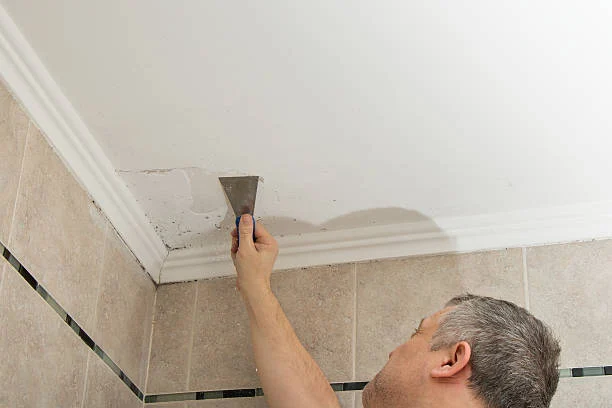
Wipe from the outside of the patch toward the middle. This keeps you from spreading spores onto clean areas. Rinse your sponge often in a bucket of clean water, or use fresh cloths.
Step 5: Wipe and Dry the Ceiling Fully
After scrubbing, wipe the ceiling with a clean, damp cloth to remove loosened mold and leftover cleaner. Then dry it well with a dry towel. This step matters a lot, because any moisture left behind lets mold return within days. Keep the fan on and the window open for a few hours. You can also point a small fan at the ceiling.
Put the used cloths and sponges in a sealed bag and throw them away, or wash cloths in hot water right away.
Step 6: Stop the Mold from Coming Back
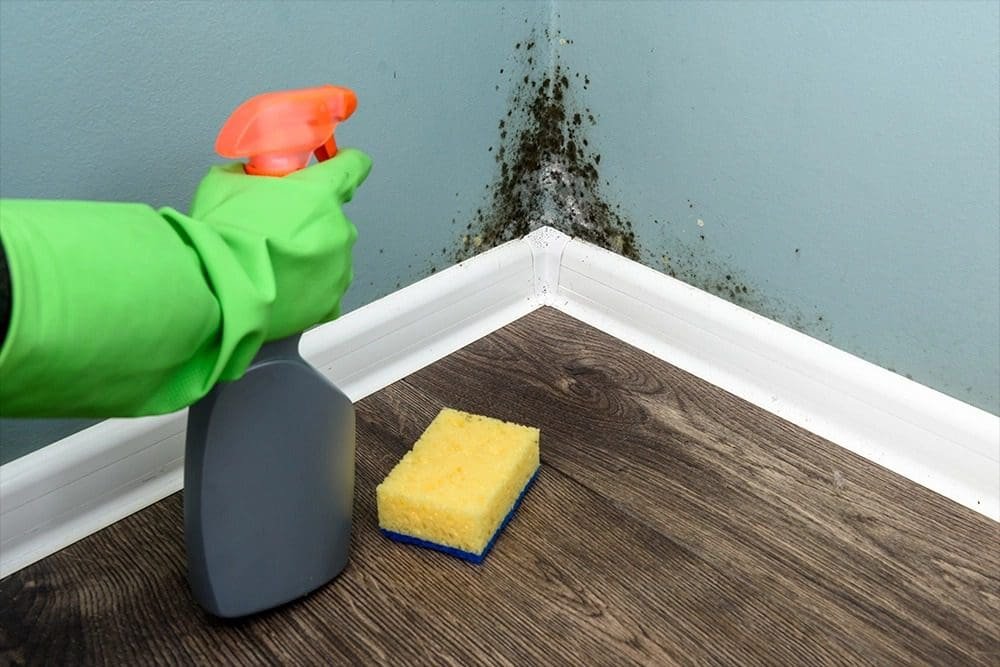
Cleaning is only half the job. To keep your ceiling clean, deal with the moisture:
- Use your fan properly. Run the exhaust fan during every shower and for 20 to 30 minutes afterward. If the fan seems weak, hold a tissue near it. If the tissue isn’t pulled firmly toward it, the fan may need cleaning or replacing.
- Open a window. Fresh air is free and very effective.
- Take cooler or shorter showers. Less steam means less moisture on the ceiling.
- Wipe wet surfaces. A quick squeegee on the walls and a wipe of the ceiling corners after a shower makes a real difference.
- Fix leaks quickly. A dripping pipe or a leaky roof above the bathroom will bring mold back every time.
- Use mold-resistant paint. When the ceiling is fully dry, repaint with a paint made for bathrooms. It contains ingredients that slow down mold growth.
- Spray weekly. Once a week, lightly mist the ceiling with diluted white vinegar (half vinegar, half water) and let it dry. It’s a cheap way to stop new spots from forming.
What About Stains That Stay?
Sometimes the mold is gone but a faint shadow remains. That’s usually a stain in the paint. Try hydrogen peroxide once more. If it doesn’t fade, apply a coat of stain-blocking primer and repaint. Make sure the ceiling is completely dry first.
Frequently Asked Questions
1. Is vinegar really strong enough to kill bathroom mold?
Yes, for small, surface-level mold. White vinegar kills many common household mold types. For heavy or deep growth, or mold inside the material, you may need a professional.
2. Can I use vinegar and baking soda together?
You can use them one after another, but not as a mix. When combined, they fizz and cancel each other out, which makes the cleaner weaker. Spray vinegar first, wait, then use baking soda on a damp sponge to scrub.
3. How long does it take for mold to come back?
If moisture is still high, mold can return in a few weeks. If you dry the ceiling well, improve ventilation, and spray weekly, it may not return for many months.
4. Is bathroom ceiling mold dangerous to my health?
It can be. Mold may cause sneezing, coughing, itchy eyes, and skin irritation, and it can trigger asthma attacks. If anyone in your home has breathing problems, take mold seriously and clean it quickly, or hire a professional.
5. When should I call a professional?
Call one if the moldy area is larger than about one square meter, if it returns repeatedly after cleaning, if the ceiling is soft or sagging, or if you suspect a hidden leak. These signs mean the cause is deeper than surface mold.
Final Thoughts
You don’t need bleach to clean mold from a bathroom ceiling. Vinegar, hydrogen peroxide, and baking soda work well on small areas, are safer to handle, and are kinder to your home. The real secret is patience: let the cleaner sit, dry the ceiling fully, and fix the humidity problem that caused the mold in the first place. Do those things and your bathroom ceiling will stay clean for a long time.
Recommended Articles:
15 Small Kitchen Organization Ideas That Actually Work
How to Fix a Leaky Faucet Yourself in Under an Hour
18 Low Cost Marketing Ideas for Small Business That Deliver
Best Free Cloud Storage Options 2026: Top 8 Compared
What Documents Are Needed for Romanian Citizenship? A Complete Guide