

You can market a small business with no advertising budget by using the resources you already have: your knowledge, existing customers, personal network, website, and time. Start with one clear offer, choose two or three free channels that your customers already use, and work on them every week. You do not need to be active everywhere. You need to be useful, easy to find, and simple to contact.
Start with a clear offer before promoting your business
Before you post on social media or contact potential customers, make sure people can understand what you sell. Write one plain sentence that explains who you help, what problem you solve, and what someone should do next. For example: “I help busy homeowners keep their yards tidy with weekly lawn care. Message me for a free estimate.”

A clear offer makes every free marketing activity stronger. It gives you a consistent message for your website, social profiles, emails, and conversations. Avoid trying to sell every service in one post. Lead with the service or product that solves the most common customer problem, then explain other options when people ask.
1. Use your personal network without spamming people
Your first potential customers may already be one conversation away. Make a short list of people who know you, former colleagues, suppliers, neighbours, community contacts, and past customers. Tell them what your business does and the type of person you can help. Keep the message personal rather than sending the same sales pitch to everyone.
A useful message might be: “I’ve started offering home computer repairs in the area. If you know someone whose laptop is running slowly or needs a setup, feel free to pass along my details.” Give people a simple way to share your contact information. Do not pressure friends to buy, and do not add people to marketing lists without permission.
2. Ask happy customers for referrals and reviews
A satisfied customer can introduce your business to someone who already needs what you offer. After you complete a job or solve a problem, ask whether the customer knows anyone who might benefit from the same service. Make the request at a natural moment, and make it easy to forward your website or contact details.
You can also ask customers for an honest online review. Send a direct review link with a short, polite request. Never write reviews for customers, buy positive reviews, or offer rewards in exchange for a good rating. Respond to reviews in a calm and helpful way, including when a customer is unhappy. A thoughtful reply can show future customers how you handle problems.
3. Create or improve your free Google Business Profile
If customers visit your location or you travel to serve them in a local area, a Google Business Profile can help people find your business on Google Search and Maps. Eligible businesses can add or claim a profile at no charge. Use the official Google instructions to check eligibility and set it up: Google Business Profile setup.
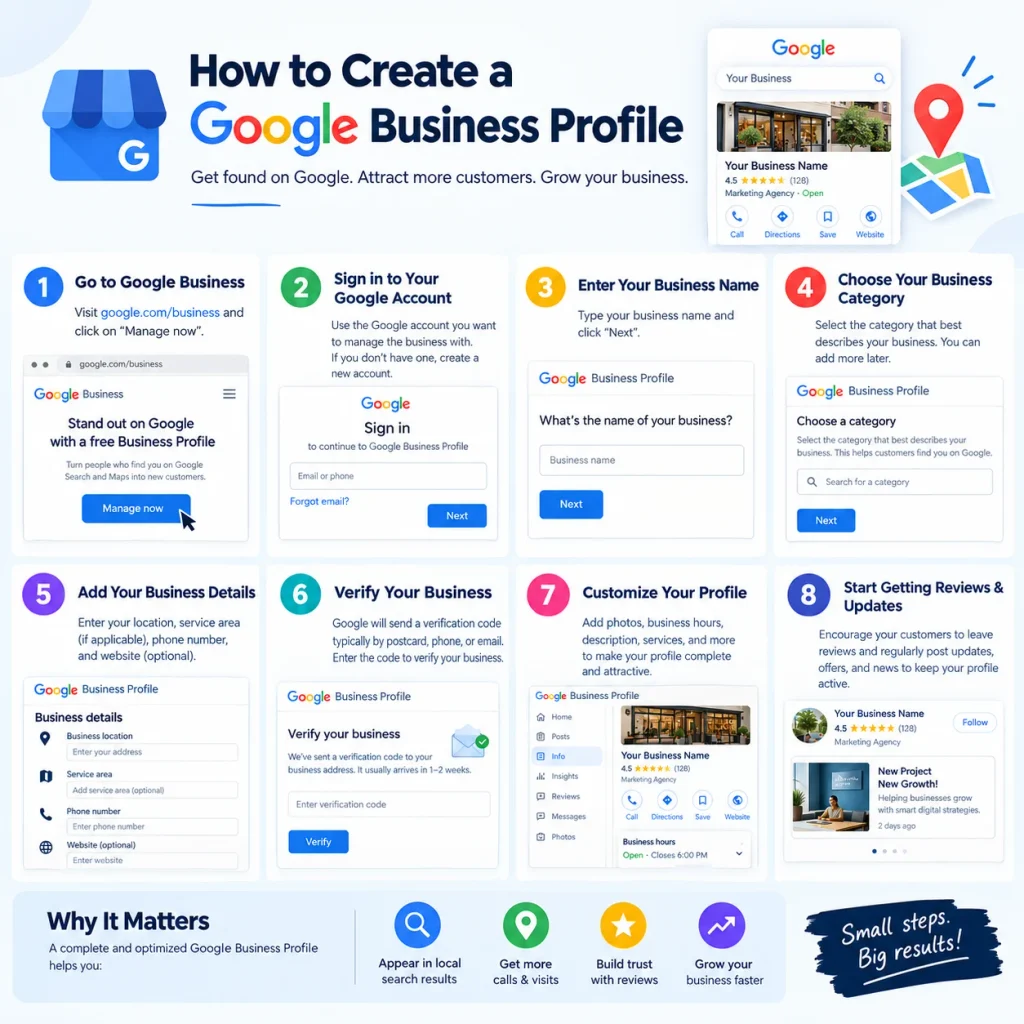
Complete the details carefully. Choose the closest business category, add accurate hours and contact information, describe your services in plain language, and upload real photos of your work or premises. Keep the information current when hours, services, or contact details change. Do not create fake locations or profiles for areas where you do not have a real business presence.
A profile is most useful when it helps a searcher make a decision. Show what you do, where you serve customers, and how to contact you. If you work from home and do not receive customers there, follow Google’s service-area business rules rather than displaying a private address.
4. Share useful content on one or two social platforms
Choose social platforms based on where your likely customers spend time. A visual business may get more value from Instagram or Pinterest, while a local service may find customers in neighbourhood Facebook groups. A business selling to other companies may prefer LinkedIn. You do not need to maintain every account.
Post information that helps people understand your work. Show a before-and-after result, explain a common mistake, answer a customer question, share a short demonstration, or describe how to choose between two options. Use your own photos and examples whenever possible. End with a simple next step, such as asking readers to send a message or visit your website.
Create a small weekly routine you can keep. For example, publish one helpful tip, one example of completed work, and one answer to a common question. Reply to genuine comments and messages. Avoid copying the same promotional post into unrelated groups, because repeated unsolicited promotion can damage trust and get you removed.
5. Join relevant online communities and answer questions
People often ask for recommendations and practical help in local groups, professional communities, forums, and discussion boards. Join only communities that match your customers or industry. Read the rules before posting, then contribute useful answers without turning every reply into an advertisement.

For example, a bookkeeper could explain what records a new shop should keep, while a bicycle repair business could answer a question about a noisy chain. If someone asks for a service recommendation and promotion is allowed, explain what you offer and share a contact link. If the group does not allow business posts, respect that rule.
6. Build a simple website that answers customer questions
A basic website gives interested people one reliable place to check your services, prices or quote process, service area, contact details, and examples of your work. You do not need dozens of pages at the start. A clear home page, service page, about page, and contact page may be enough for a small service business.
Add useful answers to questions customers ask before they buy. A plumber might explain signs of a leaking pipe. A tutor could describe how a first lesson works. A small online shop could explain delivery times, returns, and product care. These pages can help visitors decide whether your business fits their needs.
Make each page easy to read on a phone. Use descriptive page titles, clear headings, helpful photos, and contact details that are easy to find. Google’s SEO Starter Guide explains practical ways to make pages easier for search engines and people to understand. Search visibility takes time, so do not expect a new page to bring customers overnight.
7. Partner with businesses that serve the same customers
Look for a business that reaches the people you want to serve but does not sell the same thing. A wedding photographer might work with a florist, a home cleaner could connect with a property manager, and a web designer could partner with a copywriter. Both sides can refer suitable customers without paying for ads.
Start with a specific idea. Offer to exchange referrals when a customer needs the other service, create a joint checklist, run a short online session, or contribute a useful tip to each other’s newsletter. Agree on what each person will do, and make sure any referral arrangement is clear to the customer. Build the relationship first instead of asking a stranger to promote you immediately.
8. Use email to stay in touch with interested customers
Email can help you stay connected with people who have chosen to hear from your business. Invite customers to sign up for updates, useful tips, product news, or occasional offers. Explain what they will receive and how often you plan to send it. Use a simple sign-up form on your website or ask customers directly for permission.

Send information people can use, not a sales pitch every time. A repair shop could share seasonal maintenance advice. A bakery could announce its weekly menu. A consultant could send a short checklist related to a common client problem. Include a clear way to unsubscribe and follow the email marketing and privacy rules that apply where your subscribers live.
9. Offer a small useful resource or demonstration
A practical free resource can give a potential customer a reason to remember your business. It could be a checklist, short guide, sample lesson, product demonstration, consultation, or simple calculator. Choose something that solves a small problem your ideal customer already has and that naturally connects to your paid offer.
Keep the resource focused. A home organizer might offer a one-page room decluttering checklist. A tax preparer could share a list of documents to gather before an appointment, while making clear that it is general information rather than personal tax advice. Share the resource on your website and in relevant communities where sharing it is allowed.
10. Follow up and track which activities bring customers
Many small businesses lose potential work because they forget to reply or follow up. When someone asks for a quote, respond within a reasonable time, answer the question directly, and agree on the next step. If the person needs time to decide, ask whether it is okay to check back later. Keep a simple record of the date, enquiry, source, response, and outcome.
You can track this in a spreadsheet with columns for date, customer, service requested, how they found you, and whether they booked. Ask new customers, “How did you hear about us?” This basic question helps you see whether referrals, social posts, search, partnerships, or community activity are bringing real enquiries.
Review the results every month. Keep the activities that lead to useful conversations or sales. Change the message or channel if people see your posts but never contact you. Do not judge a marketing method only by likes or views. The useful result is a qualified enquiry, a booking, a sale, or a repeat customer.
A simple 30-day plan for marketing with no budget
A short plan makes it easier to act instead of trying every idea at once. Use the first week to write your offer, update your contact details, and list the questions customers ask most often. In the second week, contact people in your network, ask past customers for honest reviews, and complete your business profile if you are eligible.
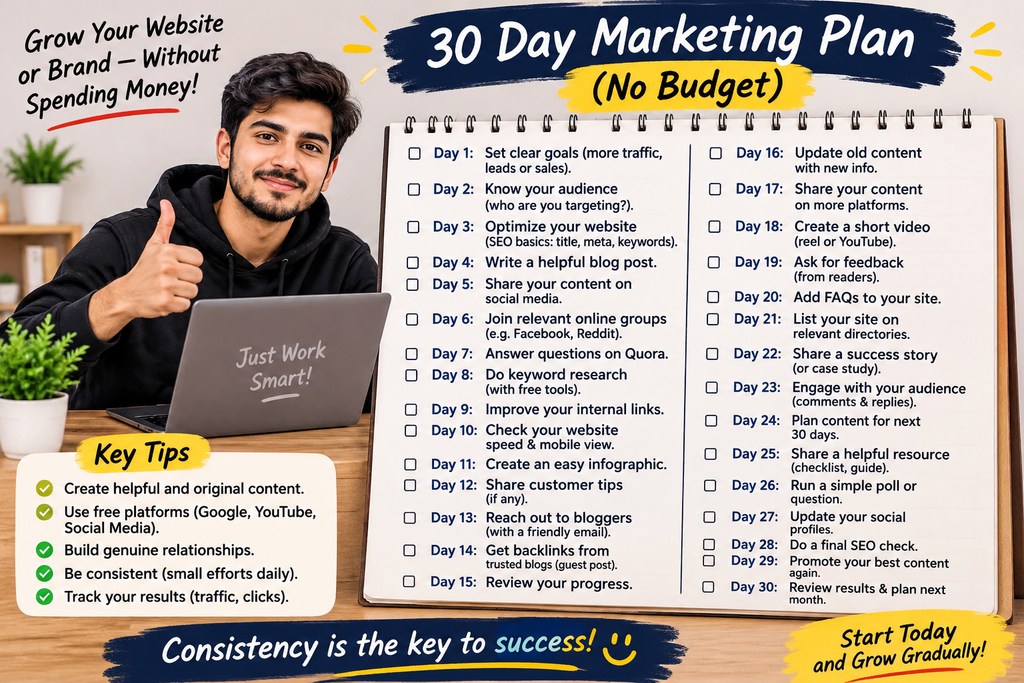
During the third week, publish two helpful social posts and answer questions in one relevant community. Contact two businesses that serve a similar audience and suggest a small partnership. In the fourth week, publish one useful website page or resource, follow up with open enquiries, and review where your leads came from.
The plan should fit your available time. If you can only spend three hours a week, choose fewer activities and do them well. A consistent routine that you can maintain is more useful than a long list of tasks that stops after a few days.
What free marketing can and cannot do
Free marketing can help a small business become easier to discover, build trust, earn referrals, and start conversations with likely customers. It usually costs time rather than money. You may need to write posts, take photos, answer questions, attend local events, or follow up with leads before you see a result.
It cannot guarantee sales or replace a good product, fair pricing, reliable service, and clear communication. Some channels also have limits: social platforms control who sees your posts, search rankings take time, and a small email list reaches only the people who signed up. Treat free marketing as steady relationship-building, then consider paid promotion only when you know which offer and channel are working.
Frequently asked questions
How can I promote my small business for free?
Start with your personal network, customer referrals, a complete Google Business Profile if you serve a local area, helpful social posts, and relevant online communities. Choose the channels your customers use and keep your contact details easy to find.
What is the best free marketing tool for a small business?
There is no single best tool for every business. A local service may benefit most from Google Business Profile, while an online shop may get more value from social content and email. Pick tools based on where customers look for your offer.
How do I get my first customers without paying for ads?
Explain your offer clearly to people in your network, contact potential partners, answer questions in relevant communities, and ask satisfied customers for referrals. Make it easy for interested people to contact you and respond promptly.
Does free marketing take longer than paid advertising?
It often takes time to build reach and trust because you are investing effort instead of buying exposure. Referrals and useful content can continue bringing enquiries, but results vary by business, audience, and consistency.
How much time should a small business spend on free marketing?
Start with a schedule you can maintain, even if it is only a few hours each week. Focus on two or three activities, track enquiries and sales, and adjust the time based on what brings useful results.
Conclusion
To market a small business with no money, start with a clear offer and focus on a few free channels your customers already use. Ask for referrals, improve your online presence, share useful advice, build local partnerships, and follow up with every genuine enquiry. Track which activities lead to customers, then give more time to the ones that work. A simple routine done consistently is a stronger starting point than trying every marketing idea at once.
Recommended Article:
How to Create a Directory in WordPress (Step by Step)
Why Is Autoblogging.ai the Best AI Writing Tool? What It Does Well and Where It Falls Short
How to Find Radio Stations From Other Countries
603 Manufacturing Warranty, Returns and Shipping Terms Explained
IWRTech Archives InterWorldRadio: A Complete Guide to Digital Radio Archives and Broadcasting Knowledge



[…] How to Market a Small Business With No Money: 10 Practical Ways […]
[…] How to Market a Small Business With No Money: 10 Practical Ways […]