
You can sell food from home in the United States, but only the foods your state allows, and only if you follow its rules. Those rules come from your state’s cottage food law. It sets what you can make, how you label it, where you can sell it, and how much you can earn in a year.
This guide walks you through the steps in order: find your rules, pick a product, get your training and permits, label and price your food, and find your first customers. It also covers what to do if your idea doesn’t fit the cottage food rules.
What is a cottage food law?
A cottage food law lets you make certain low-risk foods in your home kitchen and sell them without a full commercial food license. Low-risk means the food stays safe at room temperature. Bread, cookies, and jam fit. A cream pie does not.
Almost every state has one, and no two are the same. Here are two examples of how far they can differ.
- California has two permit classes. A Class A operation sells directly to customers and can earn up to $75,000 a year. A Class B operation can also sell through stores and restaurants, up to $150,000. Both go through the county health agency, take a food processor training course, and stick to a state list of approved foods.
- Texas does not ask most home bakers for a local permit. Since September 1, 2025, the yearly cap has been $150,000. Operators take a food handler course, and those who sell foods that need time and temperature control must register with the state.
Your state may look different from both. That is why your first job is to read your own rules.
How do you find your state’s cottage food rules?
Search for your state’s name plus “cottage food law” and open the result on a .gov website. It is usually run by the state department of agriculture or health. The California Department of Public Health’s cottage food page and the Texas DSHS cottage food page show what a clear state page looks like.
Write down five things: the approved foods, whether you must register or get a permit, what training you need, what the label must say, and your yearly sales cap. Then check your city or county for zoning rules and a business license. If anything is unclear, call or email the agency. A written answer from an official is worth keeping.
What foods can you sell from home?
Most states allow foods that stay safe without refrigeration. Foods that spoil easily are usually off the list.
| Usually allowed | Usually not allowed |
| Bread and rolls | Cheesecake and cream or custard pies |
| Cookies and brownies | Meat, poultry, and fish |
| Granola and snack mixes | Milk, cheese, and other dairy |
| Jams and jellies | Anything that must stay refrigerated |
| Candy and fudge | Fresh-cut produce and salads |
| Dry spice and baking mixes | Low-acid canned goods |
Treat the table as a starting point. Some states allow more. Texas, for example, now lets some operators sell foods that need time and temperature control if they register with the state. Check your state’s approved list before you bake a single batch.
Selling baked goods from home
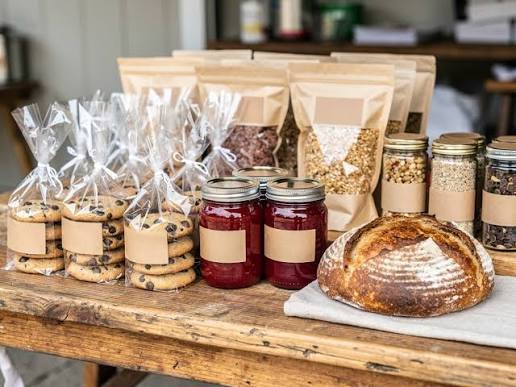
Baked goods are the most common cottage food, so the competition is strong. Start with items that keep well, such as cookies, brownies, loaf cakes, and bread. Be careful with cream cheese frosting, custard, and whipped cream. They usually need a fridge, and many states won’t allow them. Pick one signature item first. It is easier to become known for one great sourdough than for ten average treats.
Packaging matters too. Sealed bags or boxes keep baked goods clean and fresh, and they give you a flat place to stick your label. Test how long each item stays good at room temperature, so you know how far ahead you can bake for a market day.
What do you need before you sell?
The list depends on your state, but most home sellers deal with some mix of these.
- Food safety training. Many states require a short food handler or food processor course. Most can be done online for a small fee, and some need renewing every few years.
- Registration or a permit. Some states ask you to register. Others, like California for Class B, require a county permit. A few ask for nothing beyond following the law.
- A business license. Your city or county may want one even if the state does not.
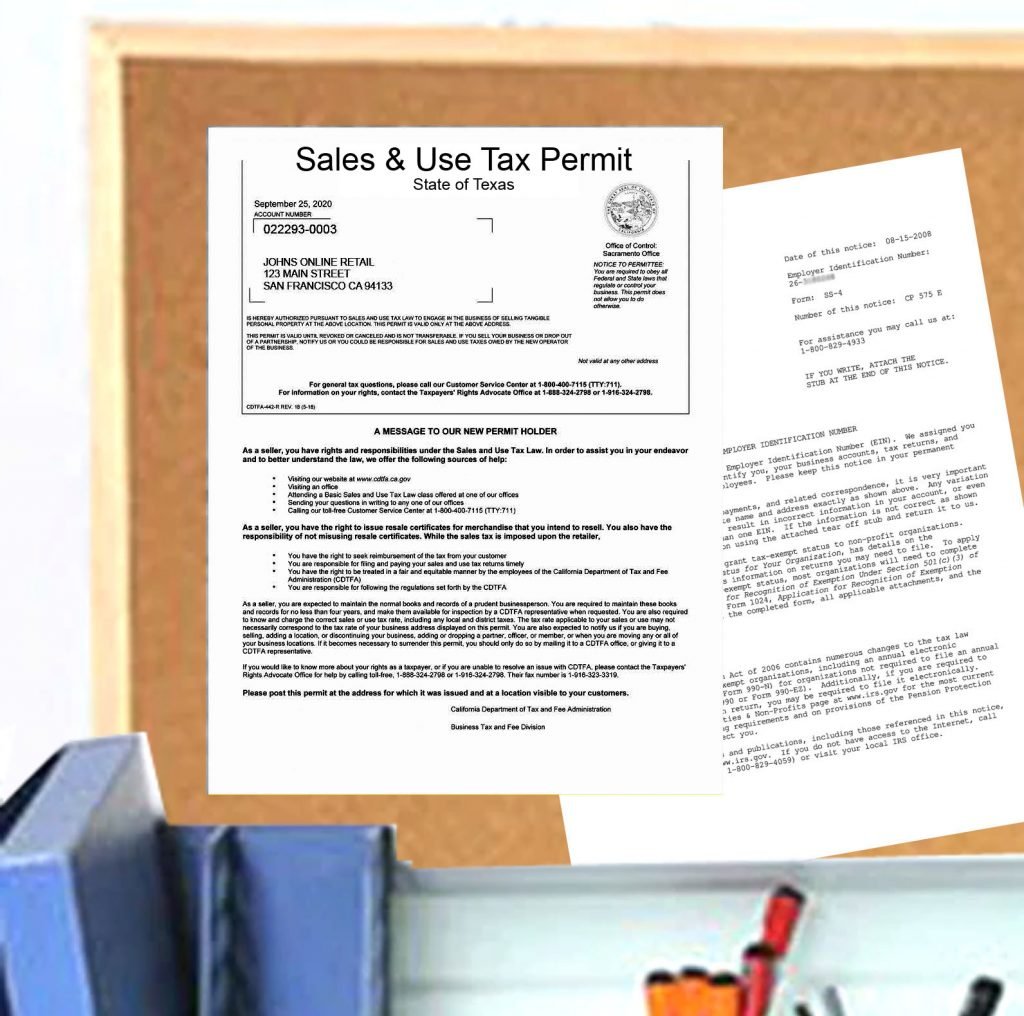
- A sales tax permit. Some states tax certain food items. Your state revenue department can tell you.
- Permission from your landlord or HOA. State law can allow home food sales while a lease or HOA rule does not.
You don’t need an LLC to start in most states. Many sellers begin as sole proprietors. An LLC can separate your personal and business assets, but it adds fees and paperwork, and it does not replace insurance. A local accountant or attorney can help you decide.
How do you label homemade food?
Labels are one of the easiest places to slip up, and one of the easiest to fix. Exact wording varies by state, but most labels include:
- The product name, such as “Chocolate Chip Cookies”
- Ingredients, listed from the largest amount to the smallest
- Major allergens
- Net weight or volume
- Your name and address, or a registration number where your state allows it
- A short note that the food was made in a home kitchen, if your state requires it
Federal law names nine major food allergens: milk, eggs, fish, shellfish, tree nuts, peanuts, wheat, soybeans, and sesame. If your recipe contains any of them, say so clearly on the label.
Tip: Print one test label and read it like a customer with a peanut allergy would. If anything is missing or unclear, fix it before you sell.
How do you price your food?
Many new sellers guess at prices or copy a friend. That is how people end up working for free. Add up every cost, including your time, then set a price that covers it.
Here is an example for one batch of 24 cookies sold in six bags of four. The numbers are only an illustration, so use your own costs.
| Cost | Amount |
| Ingredients | $14.00 |
| Packaging (6 bags) | $3.00 |
| Labels and ink | $1.50 |
| Your time (2 hours at $15) | $30.00 |
| Total cost | $48.50 |
Sell the six bags at $10 each and you bring in $60. Card fees take a few dollars, so you keep roughly $8 to $9 after paying yourself $15 an hour. At $5 a bag, you would bring in $30 and lose money. Add market booth fees, gas, and insurance as you grow.
Where can you sell homemade food?
Start where customers can meet you and see your food.
- Farmers’ markets and craft fairs. Good for visibility. Ask about booth fees and any rules for home-made foods.
- Local Facebook groups and neighborhood apps. Good for repeat orders from nearby buyers.
- Instagram. Clear photos and short videos of your food can bring in orders.
- Your own order form or simple online store. Customers order online and pick up locally.
- Stores and restaurants. Often not allowed. California, for example, only lets Class B operations sell this way.
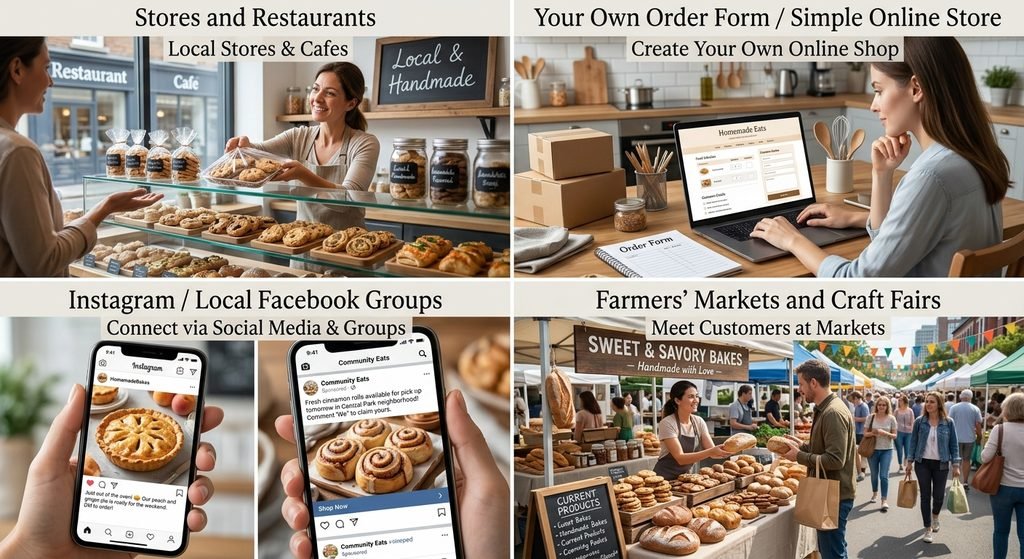
Online selling has rules too. Texas lets you take online orders if you post the required label information on your website before you accept payment. In most states, cottage food can only be sold inside the state, so shipping across state lines is usually off the table. Check your state’s rules on delivery and shipping before you promise anything.
What if your idea doesn’t fit cottage food rules?
If you want to sell hot meals, foods that need refrigeration, or more than your state’s cap allows, you have other options.
- Microenterprise home kitchen permits. California counties can opt in to this program. It lets a home cook sell freshly made meals, up to 30 meals a day or 90 a week and up to $100,000 a year, with a county permit and a yearly inspection.
- Home bakery or home processing licenses. Some states offer these for sellers who outgrow the cottage food rules.
- A shared or commissary kitchen. You rent time in a licensed commercial kitchen, which opens the door to wholesale and wider sales.
Each of these costs more and takes more paperwork, but they remove many of the limits.
How much can you earn?
Most states cap how much you can earn from cottage food sales in a year. Once you pass the cap, you generally have to move to a licensed commercial kitchen and follow the same rules as any food business. California’s caps are $75,000 for Class A and $150,000 for Class B, adjusted each year for inflation. Texas raised its cap from $50,000 to $150,000 in 2025, and that figure is also set to rise with inflation.
Other states have lower caps, higher caps, or none at all. Add up your sales every month and compare the total to your cap. If you are getting close, start planning your next step early, because a license or a shared kitchen can take weeks to set up.
Do you need insurance, and how do taxes work?
A home kitchen does not stop a customer from getting sick, or from claiming they did. Product liability insurance can cover legal costs if that happens, and some markets ask for proof of insurance before they let you sell. Several insurers offer plans made for home food sellers.
Income from selling food is taxable, even in small amounts, so keep a record of every sale and expense from day one. Sales tax rules vary by state. You may also owe self-employment tax once your net earnings reach $400 in a year. One meeting with a local tax professional early on can save you trouble later.
How do you get your first customers?
You don’t need a big budget. You need a few people who love your food and tell others.
- Ask friends and family to order and to share your order link.
- Give out small samples at markets, with the label and ingredients showing.
- Post in local groups with a clear photo, a price, and a pickup time.
- Take photos in natural light near a window, against a clean background.
- Ask happy customers for a short review on Facebook or Google.
- Keep a simple list so you can message repeat buyers when a new batch is ready.
What mistakes should you avoid?
Most problems for home sellers come from a short list of slip-ups. All of them are easy to avoid once you know them.
- Selling a food your state does not allow. Refrigerated desserts are the most common one.
- Skipping or rushing the label. Missing allergens are a real safety risk and a legal risk.
- Passing your yearly sales cap without moving to the right license.
- Forgetting zoning, lease, or HOA rules. A state law does not cancel them.
- Pricing too low. If your price ignores your time and packaging, you lose money on every sale.
- Keeping no records. You need them for taxes and for any question from a health agency.
Frequently asked questions
Can I sell food from home without a license?
It depends on the state. Some states need no license for approved foods but still require training, labels, and a sales cap. Others need registration or a county permit. Check your state’s official cottage food page before you sell anything.
Can I sell homemade food online?
Often yes, with limits. Many states allow online orders for local pickup or in-state delivery, and some require label details on your website before payment. Shipping across state lines is usually not allowed under cottage food rules.
How much money can I make selling food from home?
Your state sets a yearly cap, such as $75,000 for California Class A or $150,000 in Texas. Real earnings depend on your prices, your costs, and how many hours you can bake. Track sales monthly so you never pass the cap.
Do I need insurance to sell food from home?
Many states do not require it, but it is a smart move. Product liability insurance can cover legal costs if a customer says your food made them sick. Some farmers’ markets and events also ask for proof of coverage.
Can I sell food from home if I rent?
Maybe. State law may allow it, but your lease or landlord can still say no. Read your lease, ask your landlord for written permission, and check your city’s zoning rules before you start.
Conclusion
Selling food from home is legal in the US when you stay inside your state’s cottage food law. Read your state’s rules first, choose a food on the approved list, finish any training or registration, label every product, and price it so you earn something for your time. Track your sales against your yearly cap. Start small with one product and a few local customers, then grow from there.
Recommended Articles:
What Is Project Accounting? A Plain Guide With Examples
A Blog About Interworldradio – A Complete Guide to the Platform!
Posts on the Blog InterWorldRadio – A Complete Guide to Content, Topics, and Global Perspectives!
How to Market a Small Business on Social Media: A Practical Guide